
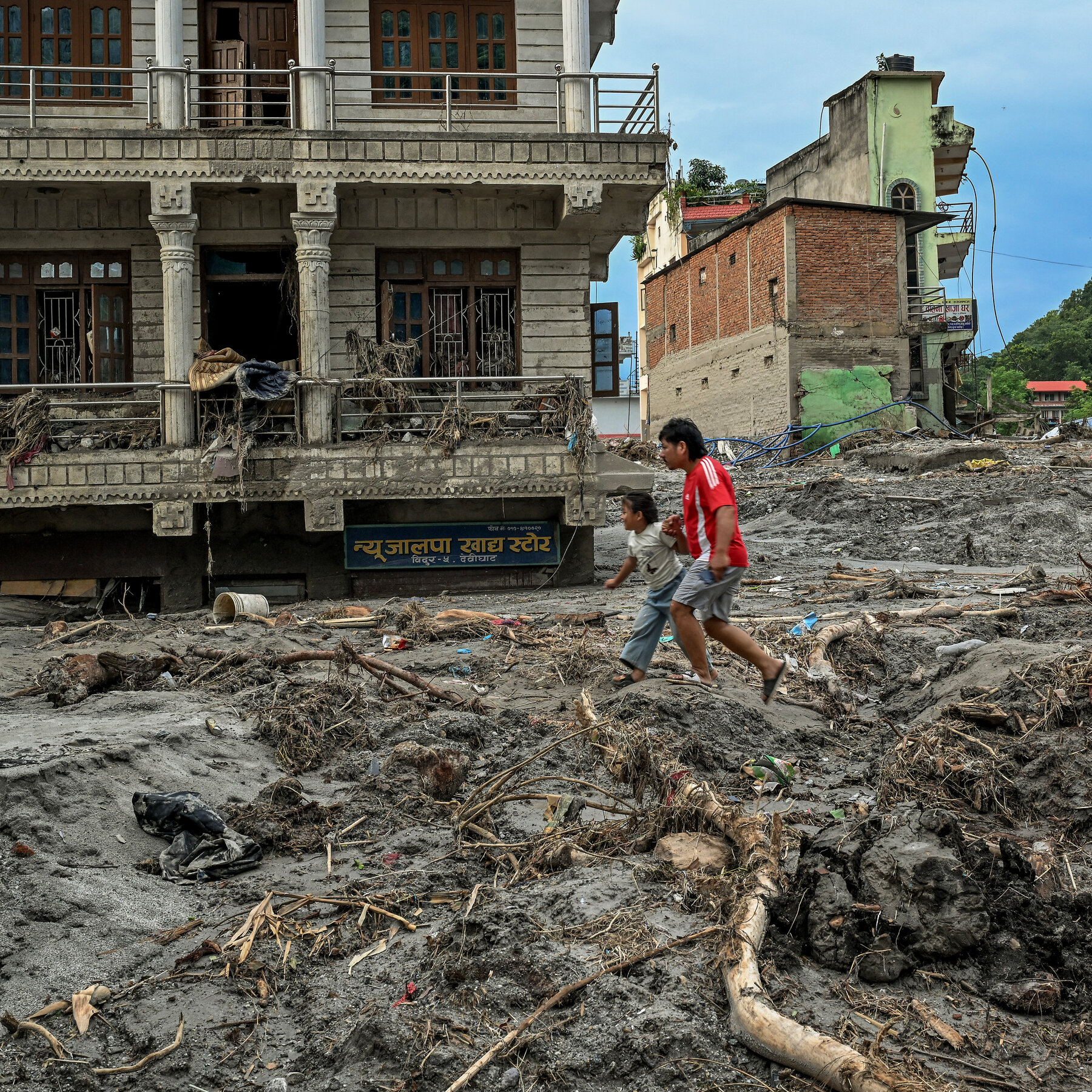
When we see heartbreaking images of the floods in Nepal, it is difficult not to feel overwhelmed.
Families have lost loved ones. Homes have been destroyed. People who were simply living their everyday lives are suddenly facing fear, uncertainty and loss.
And for someone who believes in God, an especially difficult question may arise:
If Krishna is God, why didn’t He stop the floods?
Did Krishna punish these people?
Why would God allow innocent people to suffer?
These are deeply painful questions. And there is nothing wrong with asking them.
Did Krishna Punish Them?
The Bhagavad Gita teaches us about karma — that our actions have consequences.
But this should never be misunderstood as:
“Someone suffered, therefore they must have done something bad.”
We cannot look at a person caught in a natural disaster and know their entire spiritual journey or explain their suffering.
The Gita does not give us permission to judge someone else’s pain.
Instead, it reminds us that this material world is temporary and subject to forces beyond our control.
Krishna says:
“The nonpermanent appearance of happiness and distress, and their disappearance in due course, are like the appearance and disappearance of winter and summer.”
— Bhagavad Gita 2.14
This does not mean that suffering is unreal or that we should simply accept it without caring.
Quite the opposite.
When another person is suffering, our natural response should be compassion.
We should help where we can. We should care for those who have lost everything. We should pray for those who are grieving.
So Why Didn’t Krishna Stop It?
This is perhaps the hardest question.
The Bhagavad Gita teaches that Krishna is the Supreme Lord, but the world we live in operates through the laws of material nature.
We may not understand every event or why one person experiences one situation while another experiences something different.
And perhaps we don’t need to pretend that we have all the answers.
Sometimes the most honest spiritual response is:
“I don’t fully understand why this happened, but I know that suffering should awaken compassion, not judgment.”
The Gita also teaches us that we are more than our temporary bodies. The soul is eternal, while our circumstances in this world constantly change.
That understanding doesn’t remove the pain of losing someone.
But it can give us a deeper perspective on life, death and what lies beyond what we can see.
What Can We Do When We See Suffering?
We can ask ourselves:
Am I becoming more compassionate?
Am I grateful for the people and moments I often take for granted?
Am I using my life to serve others?
Am I willing to look deeper into life’s biggest questions?
The Nepal floods may leave us with questions that don’t have simple answers.
But perhaps that is exactly why moments like these can lead us toward spiritual reflection.
We don’t have to begin with certainty.
We can simply begin with a question:
“Krishna, if You are there, help me understand the deeper meaning of this life.”
And sometimes, a sincere question is the beginning of a spiritual journey.